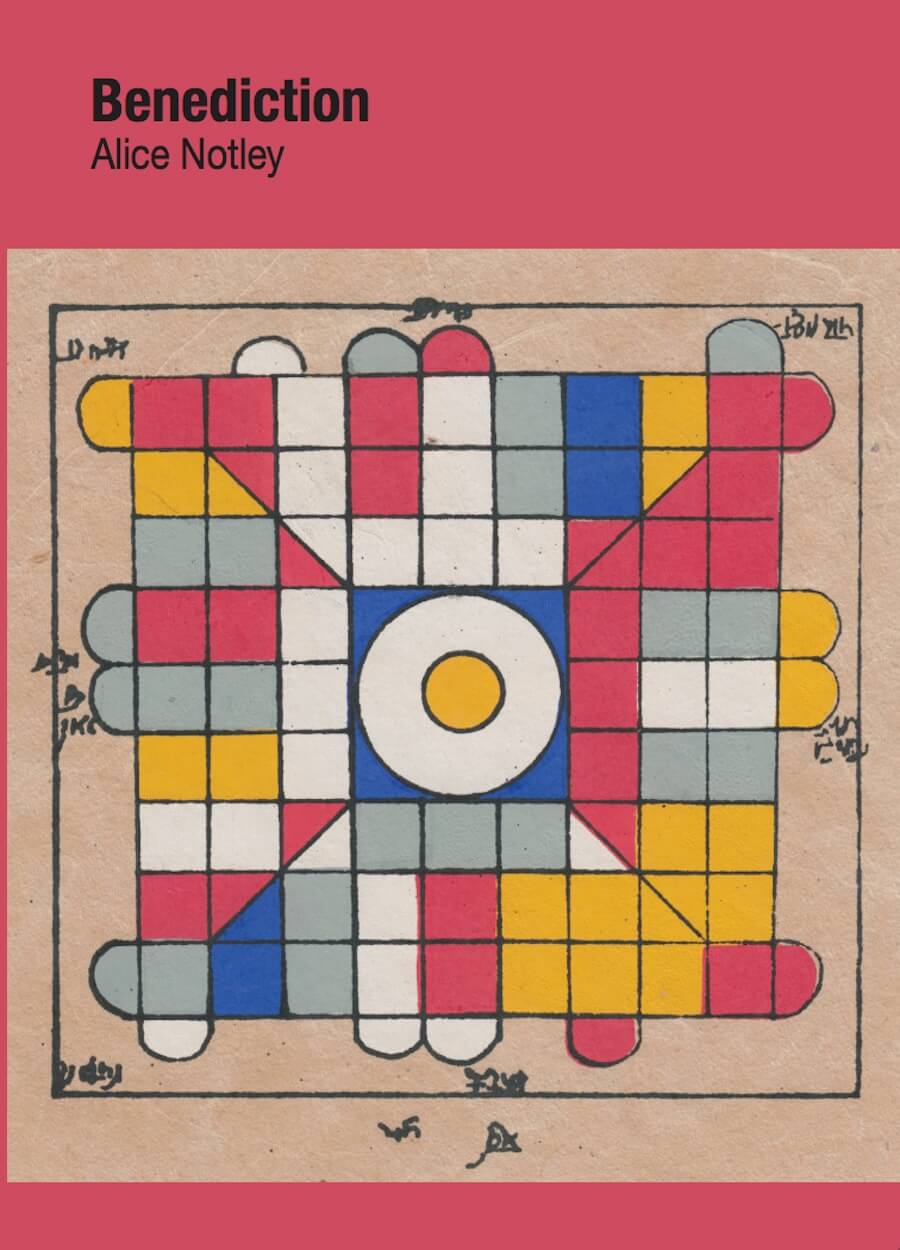
LM // Benediction – Alice Notley

LM // Benediction – Alice Notley

Sold Out

the benediction of the poison. it seals you from making the mistake, as I said in the very beginning– ‘im poison youre poison robert johnson is poison’– of living in the collective imagination both venal and decent, horrible. the poison is benedictive, and I am. I bless
but only if you want that anyone can bless anyone I bless anyone.
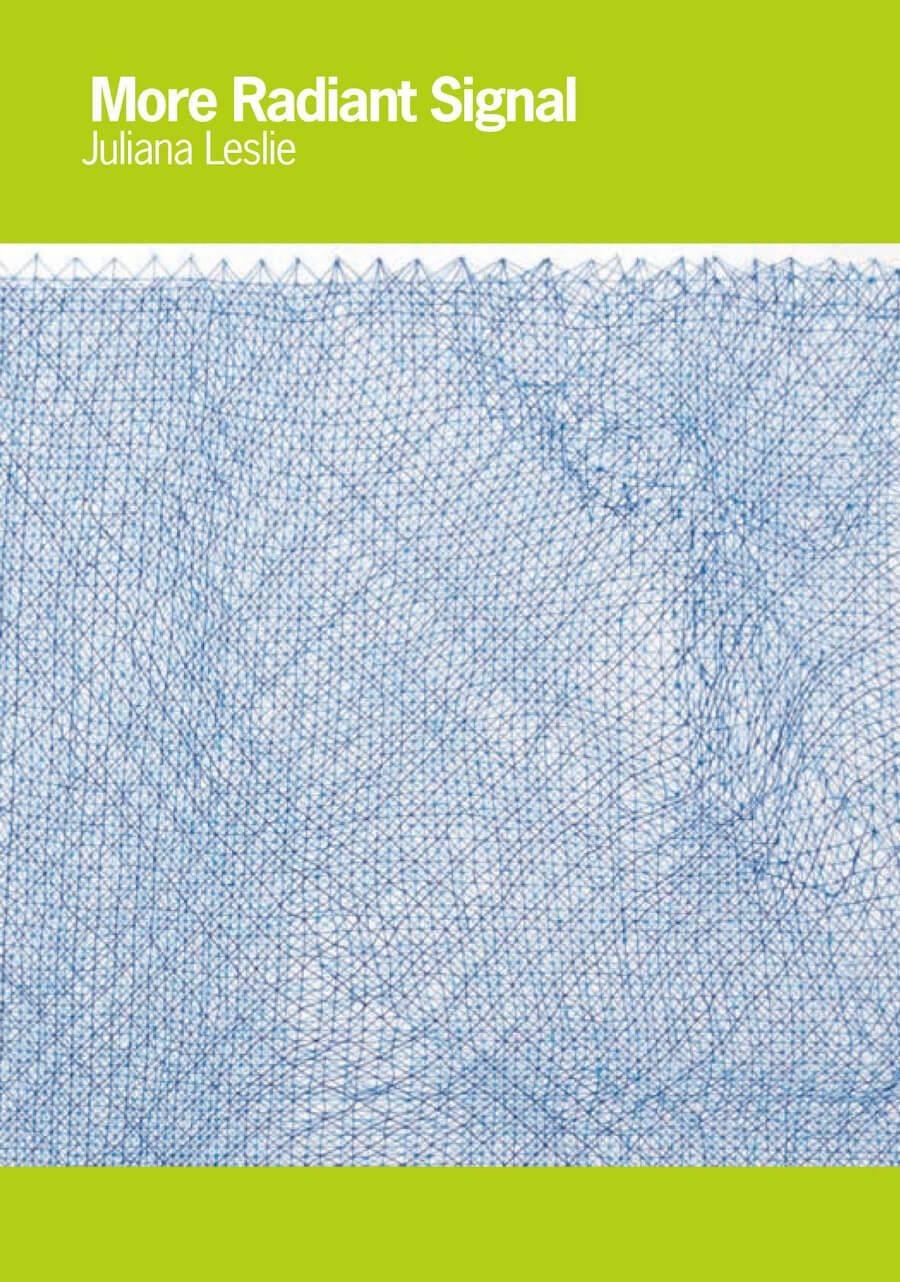
LM // More Radiant Signal – Juliana Leslie

LM // More Radiant Signal – Juliana Leslie

Clark Coolidge, in reference to his own poems, writes, “We are accustomed to regard words in only one way—as vehicle. My experiments invite you to regard words as an object—or more exactly, as an organism, with patterns of existing that are specific to itself, inexplicable and marvelous.”

More Radiant Signal, by Juliana Leslie, is a book of poems with patterns of existing, both inexplicable and marvelous. Like Coolidge, Leslie regards words as an object, as an organism, as structural units apart from their typical semantics. And in this way, Leslie builds, poem by poem, an alternative poetic literacy—idiosyncratic and highly self-aware—that prioritizes the tangible.

These poems exist in a category somewhere between mathematical proofs and textual sculpture. Either way, every page offers a unique composition: things to be figured, felt, weighed, measured, but never interpreted. (Interpretation is too removed, requires too many middlemen.) “You are the textual orange / between presence and absence” Leslie writes, interpolating radical sensation into a pair of familiar abstractions. Yet it’s the four preceding lines—of the poem “Unknown Quantity”—that mark the true engagement of this work: “How many ways to exist? / I don’t have a pencil / as if I could write this / I can’t even think.”

EXCERPT FROM MORE RADIANT SIGNAL

Someone is born in Bethlehem, Pennsylvania
Someone is a marriage of cells to a house
I think this is what it means:
To be speechless in front of a mirror
To hire geraniums
To be had as much as to have

LM // Another Random Heart – Sara Veglahn

LM // Another Random Heart – Sara Veglahn

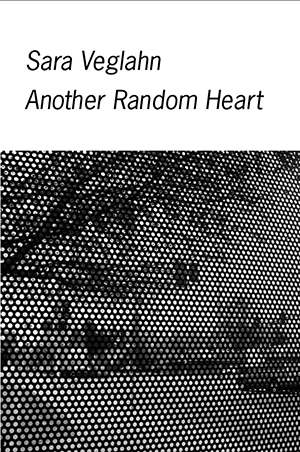
This prose-poem sequence opens with the following sentence: “Scenes left on the cutting room floor flower into their own scenery.”

Such an auspiciously suggestive start functions as a distillation of the book’s prismatic echo chamber, where painterly lyricism and narrative probing converge within each musically astute sentence. This is a symphony of partial happenings, ghostly movements, and investigatory ruminations, a stroll through an exhibit of paintings that seem to stare back at the viewer: captivating, gorgeous, and just a little bit scary.


LM // To Hell with Sleep – Anselm Berrigan

LM // To Hell with Sleep – Anselm Berrigan

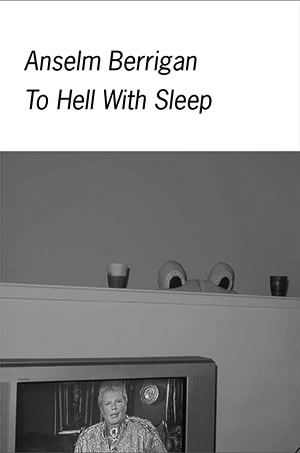
Anselm Berrigan gives us a fresh dose of his discordant mind music. To Hell With Sleep was written by the poet in the first months after the birth of his daughter, mostly during brief periods of time when  he was half-awake or less so, letting the poetry be unthought within its vehicle of eight seven-line slanting stanzas per session, of which there were nine. The impulse driving the writing was to let sounds-turning-toward-words follow from the intensified state of consciousness the arrival of this baby initiated. No prescience, reflection, computer tricks, formal appropriation, or plotting of any kind was used in the in the writing of this work. Joy, fear, humor, sound, bafflement and recognition-in-exchange-for-recognition were the instruments.

LM // This Isa Nice Neighborhood

LM // This Isa Nice Neighborhood

Can identity be pliant and penetrable? Can the speech act be one of attention over intention, can play and fluidity open onto an ethic? This Isa Nice Neighborhood, Farid Matuk’s first full-length collection, says yes. Yes to the rejection of any opposition between politics and aesthetics, between rhetoric and poetics. Yes to vulnerability. Yes to a poetry willing to enact the errors, uncertainties, and tangled complexities of our political, sexual, and social lives. Testing both narrative and lyric, Matuk finds desire at the root of each, a root from which, these poems suggest, compassion and permission grow intertwined.

This Isa Nice Neighborhood has been awarded an Honorable Mention in the 2011 Arab American Book Awards, named a finalist for the Norma Farber First Book Award by the Poetry Society of America, and chosen by Geoffrey G. O’Brien for inclusion in the Poetry Society of America’s New American Poets series.


LM // Texture Notes – Sawako Nakayasu

LM // Texture Notes – Sawako Nakayasu

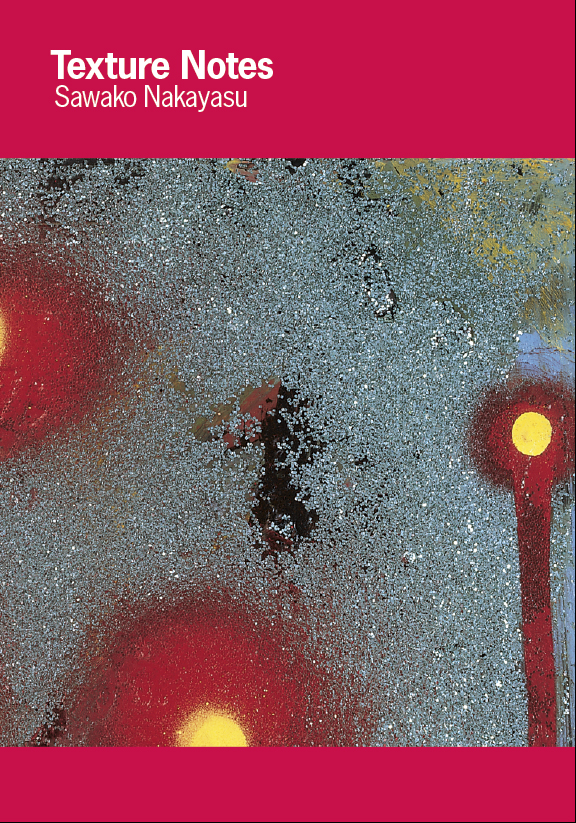
Is there a relationship between the population density of Tokyo and the pinkest part of a hamburger? Can one touch the inside of a noun to learn the difference between one bicycle and a field of bicycles? How close is yellow to need? How far are human fears from the fears of insects? Through a sequence of prose investigations, directions, theoretical performances, and character sketches, Sawako Nakayasu’s Texture Notes presses itself against everything. Here is a book of liminal cartography, where textures are percolated by thought and propelled by feeling, where intellectual frottage meets sunlight, moonlight, the pain of seeing something beautiful and an entire town enamored by a simple rock. Once again, Nakayasu’s writing explodes with genre-bending fury and fine-tuned improvisation, leaving in its wake a largess of feeling for the things of the world.

LM // Half of What They Carried Flew Away – Andrea Rexilius

LM // Half of What They Carried Flew Away – Andrea Rexilius

Poetry.

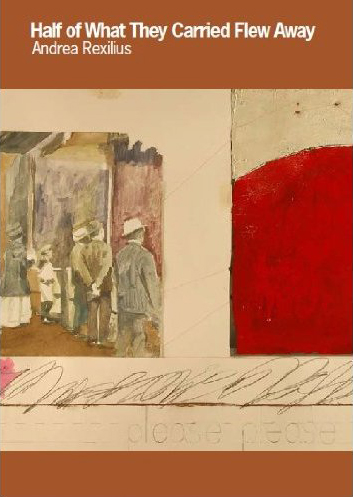
Half of What They Carried Flew Away is a text that resists containment or categorization. Could it be called a book? Not exactly. It is, rather, a document. It is field notes toward phenomenological beings – an enigmatic and evermorphing They – that are something between human and non-human, somewhere between concept and place, sometime between primordial and the everyday. Or it is scripture, yet to be consecrated, telling of a group always at the margins, peripheral, transitory, and engaged in a migration one might sense abstractly – “a material that reorders the shape of a room” – but will never define absolutely. Even when Rexilius’s speaker discovers “official definitions of who they are,” the reader is no closer to any such conclusions.

It’s in these embodied contradictions that Andrea Rexilius’s text shines. Here is a difficult and disorienting record of characters, and the impossible facts of their existence. Here is a history, fractured and disparate. Here “is a landscape, it has a beginning. It fastens and unfastens from top to bottom.”

EXCERPT FROM HALF OF WHAT THEY CARRIED FLEW AWAY

They are marginal. They move in rivulets.
They exist not only in their details.
They contain their own extraordinary destiny.
They live beside a family of small farmers.
They are discovered and decide to emigrate.
Their name is William.
They are born a little girl.

LM // Ode: Salute to the New York School – Peter Gizzi

LM // Ode: Salute to the New York School – Peter Gizzi

Poetry. An abecedarian cento of New York School poems, this piece was first delivered in March 1996 at The Popular Culture Association Conference. As Gizzi notes: “Ode: Salute to The New York School is a cento, a late Roman verse form made up of lines from other sources. First, I put together a chronological bibliography of over 100 books published by New York poets from 1950 to 1970. Many of these books are deeply out of print so I had to do some real digging. Then I extracted lines from each book to compose the cento. Happily, Clark Coolidge supplied lines from the books I couldn’t find. The cento also works as an index to the bibliography. The combined bibliography and cento form the libretto to a musical work for the composer Richard Alan Applebaum. My intention was to make what I call a ‘performing bibliography.’ Since this is, in effect, what most of us do on a daily basis—referring to or performing what we’ve read—it seemed a useful metaphor to describe how we enact our reading practice. My idea was that a simple accompaniment to a series of bibliographic entries could generate both scholarly information and an emotive effect. I wanted to express the latent desire for lists and order, and to create a texture to accommodate the eros inherent in research. What I learned along the way is that literary movements survive primarily in the ruins of the texts they leave behind rather than in the unified literary histories that we create for them after the fact.”

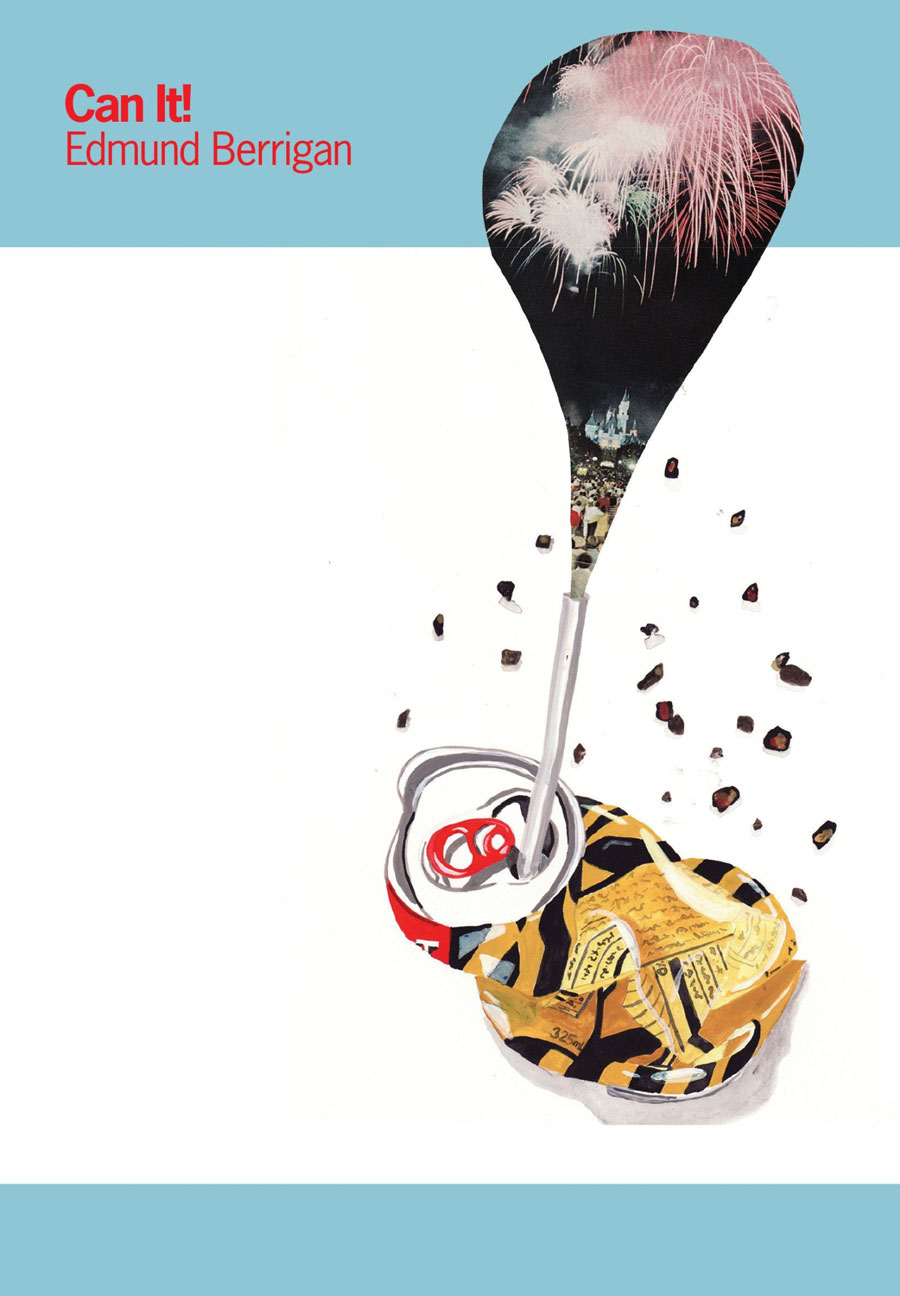
LM // Can It – Edmund Berrigan

LM // Can It – Edmund Berrigan

A memoir and other texts. March 2013.

In the foreword to his book Can It!, Edmund Berrigan explains that he’s “been looking to make a book… that works as both a whole and as parts, that might be visited from any point like a memory, that doesn’t rely on classification for definition… that tells a whole story by showing a fragmented record.” A kind of Surrealist variety show—both outrageous and contemplative—that, at its core, houses a powerful engine of coincidence, Can It! collects, recollects, experiments, and entertains. No matter the mode, the poetic line here runs true, and never misses a chance to speak back to its reader: “I’m not satisfied and neither are we. What of the filth of experimentation, the thrill of the rivet? What about satisfying the need to be imagination’s lip?” Consider Can It! a compilation of messages from the past. Or a poet’s handbook. Or a dreamscape. All of the above would be correct, and of course, fall shy of the grandeur that comprises this labyrinth of a book.