
I don’t know how to dream
the medium to give in, swerve in thousands,
priorities how they drown clear in water
and this love standing outside of time and place.— Sara Gilmore, The Green Lives (Fonograf Editions, October 2025)
FE FALL 2025 PRESS HIGHLIGHTS
- Wrong Winds by Ahmad Almallah in World Literature Today
- Ar:range:ments by Esther Kondo Heller in BOMB
- Groceries by Nora Claire Miller in The Paris Review
- The Green Lives by Sara Gilmore in Poetry Society of America
- Traceable Relation by Kimberly Alidio in Literary Hub
- Little Neck by Darcie Dennigan in The Providence Eye
- Mercurial, or Is That Liberty? by Rachelle Rahmé, Lit Hub’s 100 Notable Small Press Books of 2025
3 QUESTIONS WITH DARCIE DENNIGAN
FE Managing Editor Isabel Lemus Kristensen interviewed Darcie Dennigan over email about her novel Little Neck.
The world in Little Neck is strange, atmospheric, earthy and dusty. Its overarching themes of inheritance and familial trauma as told by a young narrator are haunting and unsettling. Death, decay, and nature are also featured heavily throughout the story. I read it as a Gothic novel. Where did the inspiration for Little Neck‘s distinct characters, mood, and setting come from?
Darcie: As I was writing it, I didn’t think, “Oh I want to write a Gothic novel,” and in fact I was trying to try out a kind of hermetically sealed world and a naive narrator like the kind in Marie Redonnet’s Forever Valley. BUT—since a lot of people have been using that word Gothic, which definitely could not apply to Redonnet, I’ve been thinking back and realize that the year I really began writing Little Neck, I went to a residency in Ballinskelligs, on the coast of Ireland, called Cill Ralaig, which are these little artist cabins built out of/inside of ancient ruins on a cliff. It was wild, freezing, windswept, so lonely. I slept with a kitchen knife under my pillow. I’m not sure what I was scared of. At first I thought murderers. Then after a few nights I thought ghosts. Now I’m thinking—myself? I was terrified and I loved it. The whole time I was there I wished I had brought Wuthering Heights with me. What I had brought was a bunch of Shirley Jackson stories and her biography. Possibly these things seeped into me and the book.
Is Little Neck a real place? I found two neighborhoods with the same name in New York and Massachusetts. Did the actual Little Neck influence the one described in the novel?
Darcie: I don’t know if I’ve ever visited any of the New England or New York Little Necks, but Little Neck is a real place in my head. I feel like I can see it, and I know its streets and where the quarry is, and how the people talk and don’t talk there. I know the town cemetery really really well—it’s similar to one in this old factory town in Rhode Island where I lived with my grandparents for a few years. But it wasn’t until I was almost done editing the whole thing that I named the town Little Neck . . . I liked that it was a very New England name, and that it had a body part in it. Everyone in Rhode Island asks me if I named it after the clams. And then I kind of clam up so that I don’t disappoint them.
What is the last book you read? What did you enjoy or not enjoy about it?
Darcie: To be honest, I just read the first installment in On the Calculation of Volume. I wish I had a sexier and lesser-known book as an answer! But I devoured it in two days. The premise is a fantasy I’ve had for about six years—to live one day over and over again and digest it in all different ways, and notice all its patterns, and explore the limits of who you are and can be within the constraints of this one day . . . so yeah, I enjoyed it. Making myself wait until I clean out the cat litter box before I can start the next one. (Maybe I’ll do that now.)
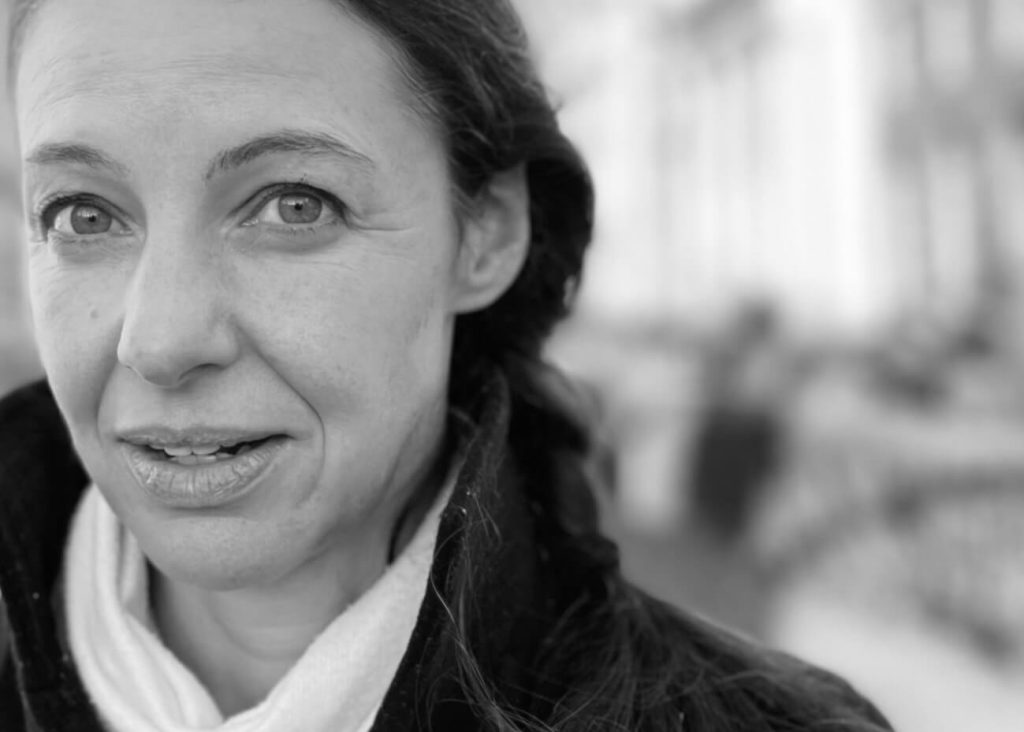
Darcie Dennigan is a novelist and poet, and a critic at large for Annulet. Her most recent book is Slater Orchard. She lives in Providence, RI, where she co-directs the Spatulate Church Emergency Shift.